

#Chile: Bachelet pledged to pass a marriage equality law
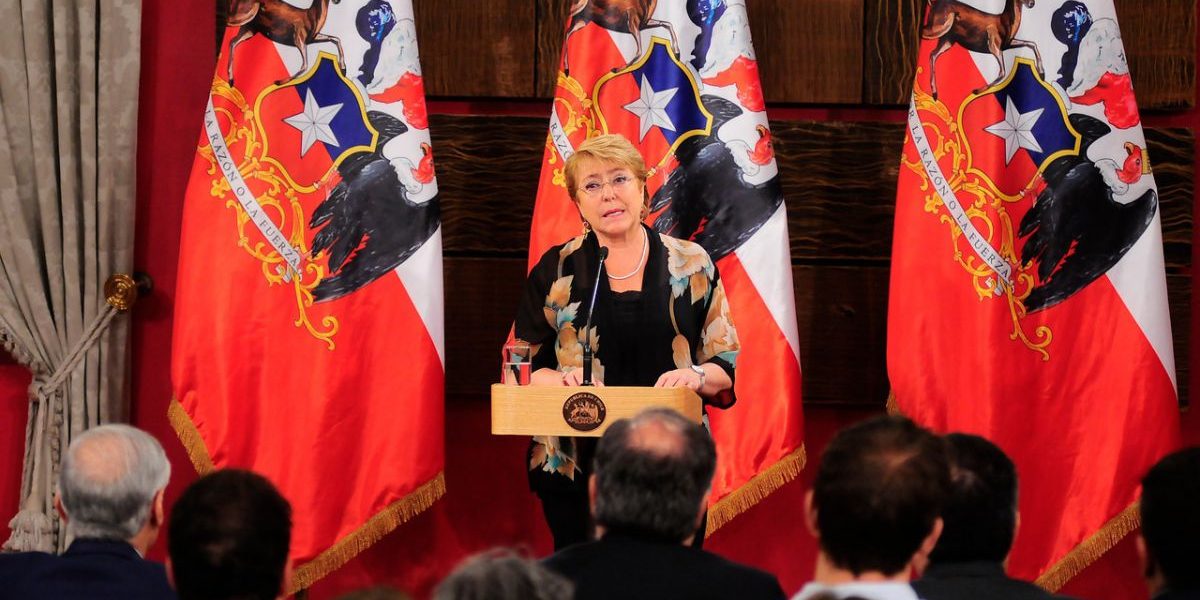
Chilean President Michelle Bachelet led a ceremony yesterday at La Moneda Palace to support the rights of the LGBTI community. This took place within the framework of the "Agreement for Equality," which the State signed with the Movement for Homosexual Liberation and Integration (Movilh) following a legal dispute.

Share

Chilean President Michelle Bachelet led a ceremony yesterday at La Moneda Palace to reaffirm support for the rights of the LGBTI community. This took place within the framework of the "Agreement for Equality," which the State signed with the Movement for Homosexual Liberation and Integration (Movilh) following a legal dispute. The Chilean government committed to sending a bill for marriage equality to Congress in the first half of this year. President Bachelet made this commitment at the presidential palace. Friday's ceremony marked the culmination of the "amicable settlement" between the government and Movilh. The organization had sued the Chilean State in 2010 for failing to recognize the marriages of three same-sex couples. After a series of court rulings, Movilh appealed to the Inter-American Commission on Human Rights (IACHR), which mediated between the parties. Thus, in July 2016, the "Agreement for Equality" was finalized.
"As a State, we commit to promoting a public, participatory, and open discussion that will allow the country to develop a satisfactory marriage equality project, recognizing the same rights for all people."”Bachelet said at the event. In addition to marriage equality, the agreement includes reforms to the Anti-Discrimination Law, to Civil Unions to recognize parental rights for same-sex couples, to the Adoption Law (to allow civil partners to adopt), and to the Gender Identity Law. It also calls for the repeal of homophobic provisions in the Penal Code and the reform of the powers granted to churches to decide whether to offer religious instruction in secular schools.President @mbachelet #EqualMarriage bill https://t.co/Wso7iHWLJp pic.twitter.com/5OgdjWOFB1
— Presidential Press Office (@presidencia_cl) January 20, 2017
[READ ALSO: Trans children in Chile, at the center of parliamentary debate ]
The ceremony was attended by representatives of the three branches of government, as well as the Constitutional Court, the diplomatic corps, and civil society.. ““We are moving forward step by step, sometimes slower than we would like, but the destination is clear and our convictions are firm,” the head of state concluded.Our team celebrating this great step for #HumanRights for sexual diversity in #Chile . Thank you President @mbachelet #equalmarriage pic.twitter.com/5ccFgil9hi
— Movilh Chile (@Movilh) January 20, 2017
[READ ALSO: Hate crime in Chile: man murdered in front of his partner ]
The president of Movilh, Rolando Jiménez, valued ““These measures and signals from President Bachelet deeply resonate. The president is leaving several legacies, but regarding LGBTI rights, the most important was making our reality a matter of state. This means that our rights cannot be ignored by future governments.” “This day is comparable only to when we legalized homosexuality or approved civil unions, because all debts owed to sexual and gender diversity are assumed as a commitment of the state, regardless of who is in power,” Jiménez added.Announced support
The socialist leader, whose second term ends in March 2018, had already announced her support for same-sex marriage during her participation in a panel on LGBT rights, held on September 21 in New York, as part of the United Nations General Assembly.Chile legalized the Civil Union Agreement (AUC) in October 2015, a union that for the first time includes same-sex couples.
The AUC considers most of the rights enshrined in Chilean marriages, except for the possibility of adoption.
The AUC was considered a major breakthrough in a country with a strong Catholic influence, where divorce was not permitted until 2004 and where abortion is still prohibited in all its forms.
Who participated, and who did not
As representatives of civil society, the following organizations participated in the event: the Corporation for Sexual and Reproductive Rights (Miles), Todo Mejora, the Jewish Community of Chile, Iguales, Cóndores and Acción Gay, the Sexual Diversity Movement MUMS, Movilh-Biobío, Movilh-Talca, and Movilh-Los Lagos. However, some LGBTI organizations stated that they were not invited. This was the case with TravesChile, a long-standing organization of the transgender community, the Transitar Foundation (which supports trans children), and Travestis Rabiosas. Other prominent figures declined the invitation, such as activist and journalist Víctor Hugo Robles, known as "El Che de los gays" (The Gay Che) and a former member of Movilh. Robles sent a letter of response that was widely circulated on social media.Thank you very much for the invitation letter from the President of the Republic, but until Michelle Bachelet Jeria responds to the letters sent by Machi Francisca Linconao to the La Moneda Palace in protest against the repression of the Mapuche people, and against cultural, sexual, and identity-based resistance, we will not celebrate any agreements for amicable solutions with the State of Chile.[READ ALSO: The “Che of the gays” bids farewell to Fidel Castro ]
Machi Francisca Linconao is under house arrest as a defendant in the Luchsinger-Mackay case. Linconao has sent a series of letters to La Moneda (the Chilean presidential palace) since the trial began. The most recent letter was made public on December 13 of last year and has not yet received a response.
]]>We are present
We are committed to journalism that delves into the territories and conducts thorough investigations, combined with new technologies and narrative formats. We want the protagonists, their stories, and their struggles to be present.
SUPPORT US

FOLLOW US
Related notes
We are present
This and other stories are not usually on the media agenda. Together we can bring them to light.