

Buenos Aires taken over by the disobedient queer comic strip
“Queer Ink,” a festival focused on comics and drawing, unfolds across three locations in the city, featuring works by established artists—from Batato Barea to Maitena—and representatives from the fanzine world. In addition to the exhibitions, there will be book presentations and plenty of music. Gender disobedience, activism, and…

Share

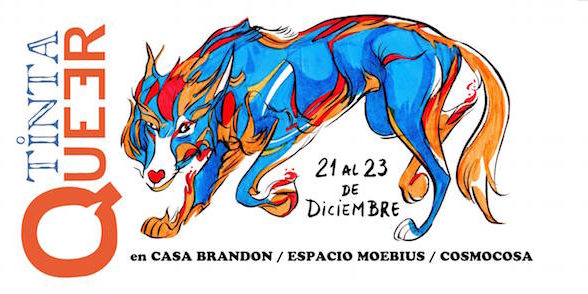
“Queer Ink,” a festival focused on comics and drawing, unfolds across three locations in the city, featuring works by established artists—from Batato Barea to Maitena—and representatives of the fanzine world. In addition to the exhibitions, there will be book presentations and plenty of music. Gender disobedience, activism, and rebellion without a GPS. By Andrea Guzmán. This isn't a comic convention; it's an unconventional orgy. That's how the Queer Ink manifesto explains it, an initiative that, for the first time in Argentina, creates a space for dialogue between comics, drawing, and other graphic and audiovisual arts from a perspective of gender dissidence. Thus, in a festive coincidence with the first day of summer, this celebration began yesterday and continues until tomorrow with a series of cultural activities across three venues in Buenos Aires: Casa Brandon, Espacio Moebius, and Galería Cosmocosa. A review of the most current national comics with a book fair, book presentations, and artistic performances. “This is an event to give form to the activism for comics that likes to disobey the mandates and abuses of machismo, of gender as a binary discipline, and of heterosexist sexuality,” explains its creator, Diego Trerotola. Grace Jones by Cons Oroza The event, organized by the restless film critic and programmer of the Asterisco Festival—as well as a comics collector and zine maker—presents itself as rebellious in every sense. First, with a presentation that breaks free from the more traditional rainbow flag and translates it with all its vitality and queer power through a fresh logo: a waddling, wild fox drawn in full color by the artist Cons Oroza. This serves as confirmation of the renewal of the comics field and the festival's driving force: “It's a way to amplify the new visibility of comics and drawing, which represents desire, bodies, and gender in a more direct and varied way. And this visibility is a community matter: it includes not only those who draw or write comics, but also those who organize events, those who write about the topic in the media, and those who read comics from a different perspective,” explains Trerotola. Therefore, as a groundbreaking event and the common thread of this gathering, the exhibition of comics by Batato Barea is presented, showcasing one of the lesser-known facets of this multidisciplinary artist. “Batato became our primal and liberating voice in comics,” says Trerotola. “Obvious Comics and Other Little Numbers” is the exhibition curated by Seedy Gonzalez Paz, which begins today at the Cosmocosa gallery and culminates with a relevant guided tour on Friday at the same place, through these drawings that broke away from the most traditional form of comics in a free and anarchic expression.
Maps of the bodies
From Wonder Woman to Krazy Kat, by way of Genesis P-Orridge and Yma Sumac, the opening exhibition, inaugurated last night at Espacio Moebius, was titled “Favorite Queer Person/Character.” Fifty artists were invited to portray their favorite queer icon. “Its aim is to blur the lines between person and character, based on the idea that gender and sexual orientation are a fruitful, indivisible intersection of reality and fantasy, which permeates our experience of pleasure,” explains Trerotola. The drawn versions are the work of a group of invited artists that includes established comic book figures like Maitena, Gustavo Sala, and Alejandra Lunik, among a fertile group of names from the underground fanzine world such as Daniela Arias, Muriel Bellini, Agustina Casot, and Jazmín Varela, and even some interdisciplinary guests like Paula Maffia. “They come from different backgrounds, and they joined together to create a map of bodies. Images that together form a very Frankensteinian collage, more like something out of Bride of Frankenstein. Furthermore, the idea that several people chose the same character is very queer: in the multiple portrait, the idea of personality as something unique is shattered,” Trerotola explains, regarding this nomadic exhibition that will travel to the festival venues in what they have called the “Effy-Ioshua Migrant Gallery,” as a tribute to the two recently deceased artists, who found in comics and poetry in their most punk form a means of resistance and activism.
 Louise Brooks by Natalia Novia
Among other highlights is the participation of the women comic artists' group Chicks on Comics, which has just opened an exhibition at Fundación Proa. Sole Otero, a founding member of this group, will draw live as part of the "Drawn Music Videos" exhibition, with music selected by Ariel Lopez V, author of "Papá Pop." Panels on feminism and sexual dissidence will be coordinated by Mariela Designis of Revista Clítoris. And to close the event, the book "Crianzas de Susy Shock" (Upbringing by Susy Shock), illustrated by her daughter Anahí Bazán Jara, will be presented. This translation of Susy Shock's radio programs, focused on children and sexual diversity, will be the final activity on Friday. "You have to try to stand out, get a little lost, explore. Tinta Queer moves forward without a GPS, without a guiding voice; it's an exquisite corpse, an orgy."
Louise Brooks by Natalia Novia
Among other highlights is the participation of the women comic artists' group Chicks on Comics, which has just opened an exhibition at Fundación Proa. Sole Otero, a founding member of this group, will draw live as part of the "Drawn Music Videos" exhibition, with music selected by Ariel Lopez V, author of "Papá Pop." Panels on feminism and sexual dissidence will be coordinated by Mariela Designis of Revista Clítoris. And to close the event, the book "Crianzas de Susy Shock" (Upbringing by Susy Shock), illustrated by her daughter Anahí Bazán Jara, will be presented. This translation of Susy Shock's radio programs, focused on children and sexual diversity, will be the final activity on Friday. "You have to try to stand out, get a little lost, explore. Tinta Queer moves forward without a GPS, without a guiding voice; it's an exquisite corpse, an orgy."
Where:
Cosmocosa (Montevideo 1430) Espacio Moebius (Bulnes 658) Casa Brandon (Luis María Drago 236)]]>Share
We are present
We are committed to journalism that delves into the territories and conducts thorough investigations, combined with new technologies and narrative formats. We want the protagonists, their stories, and their struggles to be present.
SUPPORT US

FOLLOW US
Related notes
We are present
This and other stories are not usually on the media agenda. Together we can bring them to light.