

The liberation of coming out of the closet
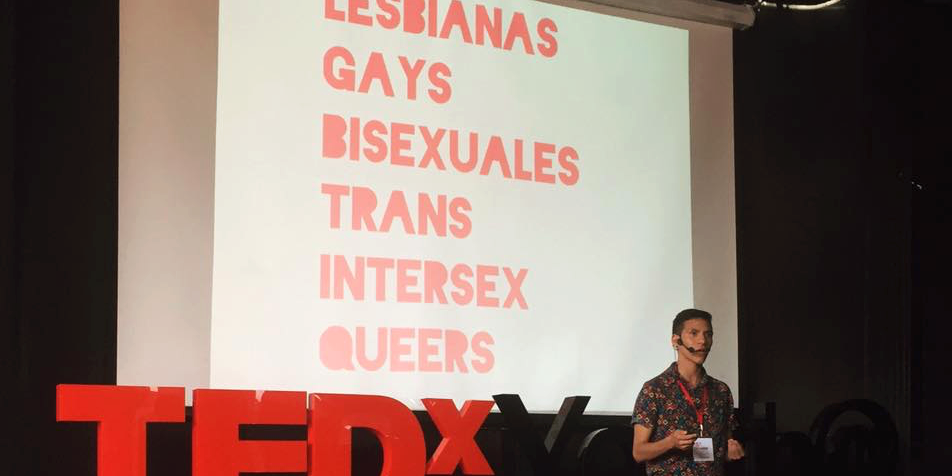
Peruvian journalist Esteban Marchand, co-founder of the website Sin Etiquetas and correspondent for Presentes, was invited to give a TED Talk about his experiences as a young gay man in a sexist and homophobic society. From school bullying to family acceptance and the peace of mind that comes with being himself. I'm Esteban, I'm 24 years old, and I'm gay…

Share

Peruvian journalist Esteban Marchand, co-founder of the Sin Etiquetas website and correspondent for Presentes, was invited to give a TED Talk about his experiences as a young gay man in a sexist and homophobic society. From school bullying to family acceptance and the peace of mind that comes with being himself. “I’m Esteban, I’m 24 years old, and I’m gay… but I want to tell you that even though I’m gay, I’m not here to convert anyone. What’s more, I can assure you that I’m not going to ‘infect’ anyone. Do you know why? Because homosexuality isn’t contagious. It’s not an illness. Twenty-six years ago, on May 17, 1990, the World Health Organization’s General Assembly removed homosexuality from its list of mental illnesses. Sometimes people think that those of us who are diverse in our sexuality or our identity want society to tolerate us.” That's not my favorite word. You tolerate something you don't like at all, something you can barely stand, and something you'll stop tolerating at any moment if you decide to stop. We want to be respected, not judged or attacked.
If this society were more respectful of diversity in all its forms, today my community would have 99 more members. 99 LGBTIQ people who have been murdered in our country since 2008. Human beings who were killed simply for being who they were: gay, lesbian, trans, queer. I realized I was gay from a very young age. I always liked boys more than girls. I liked some things that our society considers to be only for women.Whenever I could, I played with my sister's Barbies. Sometimes I'd end up taking their heads off—I have no idea why—but I usually made up everyday stories with them: family, school, and so on. In my family, I was never repressed. My mom says she always knew it, typical motherly stuff, some mothers. In elementary school, I went to a small school, just 16 of us who had known each other our whole lives. We all knew each other, and no one was surprised or said anything if a boy wanted to play with the girls or if a girl wanted to play soccer at recess. I didn't experience bullying in any form until fifth grade. When I got to sixth grade, my parents changed my school. We moved to a public school with 45 students per class, four classes per grade. Morning and afternoon shifts. For the first few months, I was just the chubby, studious kid. I was studious, coming from a smaller school, so I withdrew a bit and focused solely on studying. It wasn't long before some of my mannerisms—my voice, the way I moved my hands when I spoke, the way I walked, just the way I was—condemned me to go from being the chubby, studious kid to being the chubby, effeminate kid. It was the first time someone had called me a faggot, gay, or queer. I would freeze in the middle of the classroom every time one of my classmates yelled "saooooo" at me. What happened? I became a different person. I always loved to dance; whenever there was a performance, I was always one of the first to raise my hand to show off, obviously. That went on until sixth grade. I started to withdraw; the goal was to blend in as much as possible. The less they noticed I was there, the less they would bother me. They still bothered me, though. I didn't have a good time at school. During recess, I would spend my time reading a Harry Potter book or hanging around a classroom doing literally nothing.To be free
Why should non-heterosexual people have to endure bullying in schools? Can you imagine someone hitting you, and the only reason for hitting you is because you're heterosexual? Or because of your hair color? Your skin color? Your size? Or just the way you dress? Doesn't it make sense to be mistreated for who you are, for being different? Unfortunately, that's what happens in our society. That's why I knew that when I started university, I wasn't going to hide. It was my chance to be free after so long. But I didn't have a guide or anything like that to give me the steps to come out. I don't think there can be one; every case is completely different. I didn't know how I was going to come out, but I did have reasons to come out. It was annoying and exhausting to lie to the people you love. Lies hurt in any form. And how tiresome to have two lives, the straight one and the gay one. On top of that, I was going to have to have two Facebook accounts. My mom wasn't surprised: "I already knew," was her response. Neither was my dad. A week before Christmas, he made me a huge breakfast and said, "We need to talk." "What have I broken in the kitchen if I don't even live in this house anymore?" was my first thought. But all he wanted to tell me was that he was proud to have a gay son. The tears were the sweetest part of that breakfast. Also, coming out of the closet helps you find out who your true friends are. Fortunately, I didn't lose many, and if I did, I didn't even realize it. Today we have many LGBTQ+ role models. It would have been great if they had existed when I was a child. When I was little, if they showed a gay person on TV, it was only to stereotype them and make fun of them. There were very few artists who were out of the closet, No journalists. The gay men were just hairdressers and stylists, very respectable professions but not of any real interest to me. Today, I am pleased to know that a gay child can turn on the television and know that in Peru there are not just one but two congressmen who are gay. You can see that there are characters on television who are homosexual and who do not necessarily fall into the stereotype of the scandalous and gossipy gay man, although some do.They won't be able to get rid of us.
We're everywhere. We're construction workers, teachers, doctors, designers, communicators, dancers, hairdressers, translators, cashiers—any job you can imagine, lawyers, anyone. For almost two years, I've had a website, which I founded with a friend, dedicated to sharing news about LGBTQ+ people. The website was born because, for traditional news outlets, diverse people only made headlines if they were murdered, had run-ins with the police, or were involved in some kind of TV scandal. But as I said, people are more than their sexuality or identity, and we wanted to know what was happening in the LGBTQ+ world. Thanks to a network of collaborating journalists in Latin America, we've been able to discover very interesting stories and people that we wouldn't have known about otherwise. Also, a few months ago, I launched a web documentary series that tells the stories of people in my community. I don't consider myself an activist or anything like that. I just try to contribute, using what I know how to do, to make this a safer society for future generations, even if just a little. I hope that when people watch some of the videos I make, they realize that in the end, we're not so different. I know that everyone's process is different and that coming out isn't easy. But if anyone here is wondering how their life would change if people found out they were LGBTQ+, I can only say that Life on the other side of the wardrobe is even more beautiful than in Narnia. So remember, LGBTQ+ people are everywhere, so you're not going to get rid of us. First and foremost, we are people, and for that reason alone, we should be respected. We don't want privileges; we want the same rights as any other human being. We want future generations to not have to live in the fear that many of us have experienced. We want to be free, respected, and loved.We are present
We are committed to journalism that delves into the territories and conducts thorough investigations, combined with new technologies and narrative formats. We want the protagonists, their stories, and their struggles to be present.
SUPPORT US

FOLLOW US
Related notes

We are present
This and other stories are not usually on the media agenda. Together we can bring them to light.