

The intersex girl who lived two years registered as male
Intersex people are born with sex characteristics that do not correspond to binary notions of male or female bodies. This is the story of a mother who had to navigate a bureaucratic—and deeply discriminatory—labyrinth to have the State respect her daughter's rights. For almost two years, an Argentinian baby with…

Share

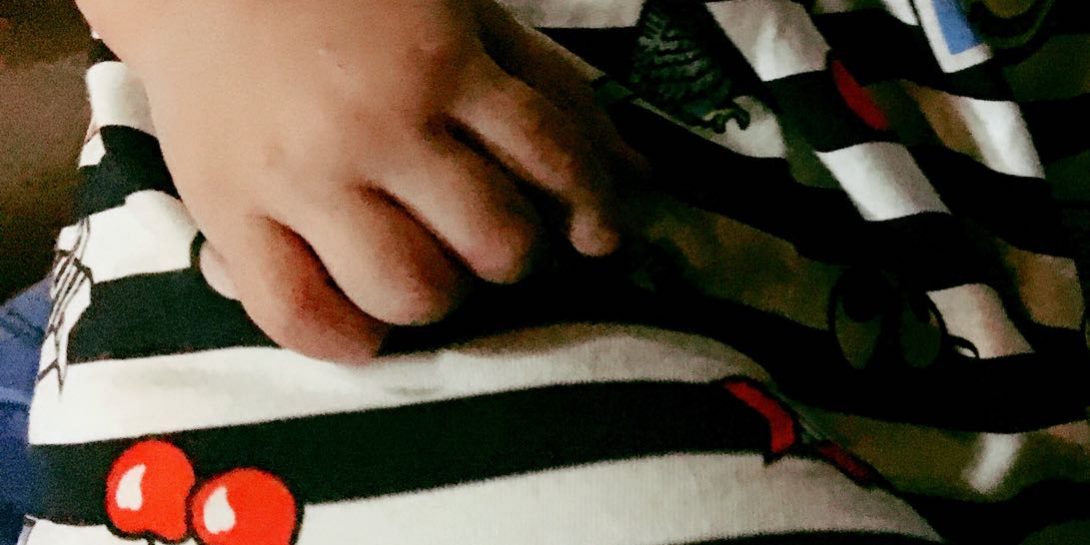
Intersex people are born with sex characteristics that do not correspond to binary notions of male or female bodies. This is the story of a mother who had to navigate a bureaucratic—and deeply discriminatory—labyrinth to have the State respect her daughter's rights. For almost two years, an Argentinian baby with intersex traits was registered as male because the civil registry of her province refused to correct her name administratively. This situation, in addition to violating the child's fundamental rights, led the mother into a bureaucratic maze. It only came to an end after two appeals by INADI (National Institute Against Discrimination, Xenophobia and Racism), when the registry finally agreed to rectify the birth certificate. The bureaucratic vacuum in which this case—whose details are being kept anonymous to protect the identity of the person involved—was trapped stems from a complex legal issue. The 2015 Civil and Commercial Code establishes two situations in which a name change can be made without judicial intervention: when it involves children appropriated by state terrorism and when there is legal recognition of gender identity. But what about a newborn who cannot express their will? How can we ensure that the birth certificates of intersex babies are corrected and, therefore, that their rights are not violated?
Being born intersex
The term intersex is used to describe a wide range of naturally occurring bodily variations. Intersex people are born with sex characteristics (such as genitals, gonads, and chromosome patterns) that do not correspond to typical binary notions of male or female bodies. In some cases, intersex traits are visible at birth, while in others they do not appear until puberty. Some chromosomal variations in intersex people may not be physically visible at all. Between 0.05% and 1.7% of the world's population is born with intersex traits, according to research compiled by the Office of the UN High Commissioner for Human Rights. In this case, the sex had been determined by the obstetrician who attended the birth. With the medical certificate in hand, the mother registered her baby with a male name at the Civil Registry in her town. But the pediatrician had doubts and advised her to consult a geneticist."Intersexuality is not an illness or a pathology."
A chromosome study confirmed that the baby was female. She had congenital adrenal hyperplasia (CAH), which the doctors who delivered her failed to recognize, leading them to issue an incorrect birth certificate. This diagnosis meant that medical follow-up was necessary to prevent health problems for the baby. Congenital adrenal hyperplasia can affect both boys and girls. It occurs in approximately 1 in 10,000 to 18,000 children. Humans have two adrenal glands, one located on top of each kidney. These glands produce hormones essential for life, such as cortisol and aldosterone. People with CAH lack an enzyme that the adrenal gland needs to produce these hormones. At the same time, the body produces more androgens, a type of male sex hormone. This results in the early development of male characteristics. “Intersexuality is not an illness or a pathology. Within the diversity that exists in any society, there is this type that breaks with the norms we understand as masculine and feminine,” explained Silvina Maddaleno, coordinator of the Sexual Diversity area at INADI, which advised the girl's family. The United Nations High Commissioner for Human Rights, Zeid Ra'ad Al Hussein, noted that: “These violations are rarely the subject of debate, much less investigation or prosecution,” he stated. “The result is impunity for those who commit them, a lack of recourse for the victims, and the perpetuation of the cycle of ignorance and transgression.”The path of bureaucracy and discrimination
After receiving the results of the chromosomal studies, the baby's mother returned to the civil registry office to request that her daughter be registered as a girl. There, she was told that the change had to be made through the courts. At the courthouse, she was given an appointment she couldn't keep: she had to take her baby to the doctor. The process wasn't just fraught with bureaucratic obstacles. In various aspects of daily life, the mother faced complex and discriminatory situations every time she had to prove the identity of a daughter with a male name: traveling, scheduling medical appointments, or enrolling her in preschool. Furthermore, she couldn't obtain a national identity document (DNI). The baby's mother went to INADI (National Institute Against Discrimination, Xenophobia and Racism), where she received advice on her daughter's rights. The provincial delegate submitted an official request to the civil registry asking for the birth certificate to be corrected. But the registry maintained the same position for almost two years. The government agreed to modify the budget item only after a second presentation by INADI (National Institute Against Discrimination, Xenophobia and Racism), based on the National Constitution, the Convention on the Rights of the Child, the American Convention on Human Rights, and the International Covenant on Civil and Political Rights. “The myth that people belong to one sex or another, in a distinct and separate way, is what contributes to the stigmatization and discrimination suffered by intersex people. Human rights violations linked to this stigma include unnecessary surgical interventions and other invasive treatments applied to intersex babies and children without their consent, which have been condemned by United Nations bodies as harmful practices and mistreatment, as well as the infanticide of intersex babies and widespread discrimination throughout their lives, in areas encompassing education, employment, health, sports, access to public services, civil registration, and obtaining identity documents,” the presentation stated. an article from the Office of the United Nations High Commissioner for Human Rights.A more expedited procedure
Another intersex girl, born some time later a few kilometers from the other baby's village, fared better. In this second case, a series of genetic tests were performed before the sex was assigned. These took time. But in this second case, the director of the local civil registry agreed to register the birth even though the established deadlines had passed, without violating the girl's right to identity.“We must avoid legal proceedings”
Iñaki Regueiro De Giacomi, coordinator of the Gender Area of the General Guardianship Office of the City of Buenos Aires, proposes flexibility and avoiding bureaucratic barriers. “These cases are not simply a matter of changing a name, but rather assigning a legal gender. Law 26,413 of the Civil Registry allows for the modification of registrations when clerical errors are detected without judicial intervention. Therefore, we already have mechanisms in place to expedite these procedures and prevent stigmatization.” “Essentially, we must avoid the judicialization of these cases,” Regueiro stated, “and frame them within a less rigid context.” He added that “this is a solution for these types of cases until comprehensive legislation is enacted, which is essential.” For its part, INADI, in a statement, emphasized the need to develop regulations on intersexuality that include respectful medical practices, in line with the registration process for the birth of intersex babies. Similarly, it recommends acting swiftly, avoiding cumbersome judicial or administrative processes, in order to reverse the violation of rights as quickly as possible and guarantee the immediate legal identification of these children.Where to get advice:
PUBLIC OFFICES IN ARGENTINA: In the City of Buenos Aires: Gender Area of the General Tutelary Advisory Office: 5297-8023 / 6 / 33 INADI and its delegations: http://www.inadi.gob.ar/ ORGANIZATIONS IN ARGENTINA: Intersex Justice: justiciaintersex@gmail.comFollow us:
In Twitter In Facebook In Instagram ]]>Share
We are present
We are committed to journalism that delves into the territories and conducts thorough investigations, combined with new technologies and narrative formats. We want the protagonists, their stories, and their struggles to be present.
SUPPORT US

FOLLOW US
Related notes

We are present
This and other stories are not usually on the media agenda. Together we can bring them to light.
I am an intersex woman who was born with CAH. I think it would be good not to make value judgments about masculinization, especially from a human rights perspective. If the article is about eradicating prejudices about intersexuality, I don't think it's right to say that the appearance of masculine characteristics is "inappropriate" (in parentheses).
Hi Alfonsina, thank you very much. We've already corrected it. Best regards.