

The transphobic murder of Diana Sacayán could go unpunished
The Court of Appeals has the final say and must decide whether or not to close the investigation into the murder of trans activist Diana Sacayán. If it is closed, the crime could go unpunished. The plaintiffs and prosecutors believe that key pieces of evidence are still needed to identify other perpetrators of the transphobic murder.


Share

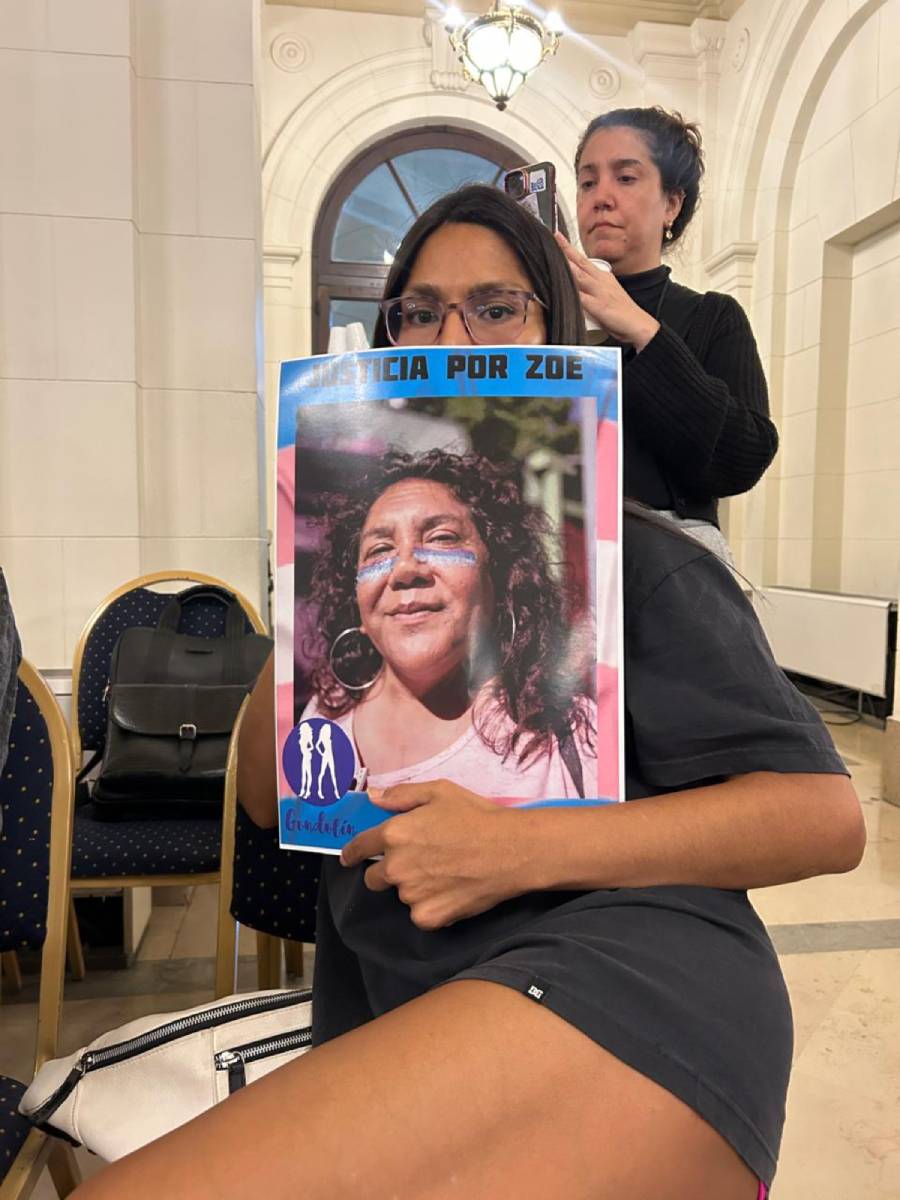
The Court of Appeals has the final say and must decide whether or not to close the investigation into the murder of trans activist Diana Sacayán. If it is closed, the crime could go unpunished. The plaintiffs and prosecutors believe that key pieces of evidence are still needed to identify the other perpetrator(s) of the transphobic murder. "Seeking justice for Diana means continuing to fight to change the lives of our trans sisters and demanding change from society," says Sasha Sacayán, Diana's sibling, a plaintiff in the case and a current leader of the Anti-Discrimination Liberation Movement. The "Justice for Diana Sacayán: Stop Transphobic Murders" commission sent a report yesterday to the Inter-American Commission on Human Rights to express its concern about the closure of the murder investigation. The decision was made by the National Criminal Court of Instruction No. 33, presided over by Judge Gustavo Pierreti, and if it stands, the crime could go unpunished. The report submitted to the IACHR details the progress and setbacks in the investigation into the murder of Amancay Diana Sacayán, the leader of the Anti-Discrimination Liberation Movement (MAL) and a prominent figure in the International Lesbian, Gay, Bisexual, Trans and Intersex Association (ILGA). She was found dead on October 13, 2015, stabbed 13 times in her apartment at 6700 Rivadavia Street, in the Flores neighborhood of Buenos Aires, where she lived with a friend. Today, the commission seeking justice for Diana presented the prosecution's support for the appeal. This means that the only chance for the murder investigation to remain open and for justice to be served for Diana Sacayán now rests on this decision by the appeals court.
"The deaths of transvestites are never investigated"
So far, only one of the perpetrators of the crime has been identified, as reported to the investigating judge by the Public Prosecutor's Office—represented by the National Criminal Court of Instruction No. 4, headed by Matías Di Lello—and the Specialized Prosecutor's Unit for Violence against Women (UFEM), headed by Mariela Labozetta. In the coordinated work of the Public Prosecutor's Office, UFEM intervened to guarantee due diligence standards in cases of gender-based violence. The prosecutors requested that Gabriel David Marino, 23, be brought to trial for the murder of a trans woman, and that the investigation be deepened regarding another person named in the case file who is also detained: Félix Alberto Ruiz Díaz. The lawsuit is being pursued by Sasha Sacayán, Diana's younger sibling, an activist and member of the commission seeking justice. "The commission was formed when the investigation began, with MAL, Conurbanos por la Diversidad, and Lesbianas y Feministas," Sacayán explained. We met many times to analyze case files and stayed up until 4 a.m. reading them. With the commission, we wanted to bring about change in the justice system, taking to the streets as a way to strengthen the cause,” says Sasha, who was active with her sister in MAL. “The deaths of trans women are never investigated; the justice system is patriarchal and heterosexist, it’s not interested. And besides, who demands justice?” Sasha asks, recalling the talks about violence and the trans women deaths that no one claimed, which her sister investigated and wrote about in the Soy supplement of Página/12. “It would be part of the justice system’s responsibility to take responsibility for those deaths. Today we want to know: Why was Diana killed? Who killed her? Her murder challenges us all,” Sasha says. “If we don’t push Diana’s case forward, the situation for everyone worsens. Seeking justice for Diana means continuing to fight to change the lives of our trans sisters and demanding change from society.” I think if it had happened to any of us, she would have done the same. What the research proved and what remains to be proven
Marino is accused of murdering Diana between Saturday, October 10, and Sunday, October 11, 2015. When her body was found on October 13, it was gagged and bound hand and foot. Among other items at the crime scene were a knife with a 20-centimeter blade, scissors, and a hammer. Days earlier, Sacayán had introduced Marino to her friends. The evidence implicates him: his DNA matches that found under Sacayán's fingernails when she tried to defend herself. A resident of the building recognized him. A security camera from a neighboring business recorded him leaving the building with another man that weekend. The prosecution and the plaintiffs believe that key investigative measures are still needed to identify other perpetrators of the transphobic murder and to determine whether the crime was related to Diana's role as a human rights activist. Among the missing steps is the identification of other DNA traces found at the crime scene or further investigation into other elements. "Trans women have an average life expectancy of 35 to 40 years. It's a cycle that leads to death, because they don't die from murder but as a result of systematic and structural violence, which continues within the justice system, because it doesn't give it the appropriate treatment," says Sasha.
 What the research proved and what remains to be proven
What impact could the request to the IACHR have?
The Inter-American Commission on Human Rights and its LGBTI rapporteur could, through this channel, request reports from the Argentine State and make recommendations for continued investigation. The request to the IACHR is similar to the one, for example, promoted by the Center for Legal and Social Studies (CELS) when a group of thugs stormed the offices of the newspaper Tiempo Argentino and sent a letter requesting information from the Argentine State regarding the investigations into the actions of the security forces. "We expect the Argentine State to report on the situation as soon as possible and to adopt all necessary administrative and judicial measures to guarantee that the investigation continues until all those responsible for the transphobic murder of Amancay Diana Sacayán are brought to justice," the commission stated in a press release.We are present
We are committed to journalism that delves into the territories and conducts thorough investigations, combined with new technologies and narrative formats. We want the protagonists, their stories, and their struggles to be present.
SUPPORT US

FOLLOW US
Related notes

We are present
This and other stories are not usually on the media agenda. Together we can bring them to light.