

"I want it to be acknowledged that my dismissal was due to discrimination."
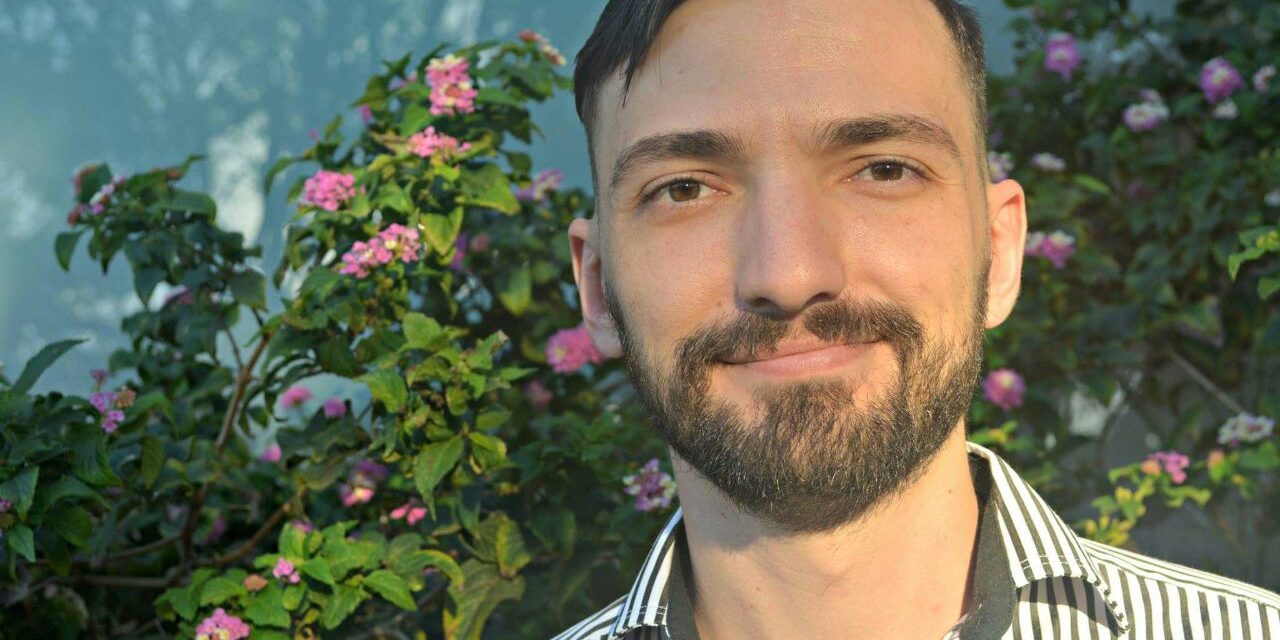
Raúl Julián Bjorklund was fired from the school where he worked as a teacher when he revealed he was going to marry his boyfriend. The school, a private institution in Oberá, already had a discrimination complaint against it. "The teacher's sexuality does not align with the institution's values," they stated. He has already filed a complaint with INADI (National Institute Against Discrimination, Xenophobia and Racism)...

Share

Raúl Julián Bjorklund was fired from the school where he worked as a teacher when he revealed he was going to marry his boyfriend. The school, a private institution in Oberá, already had a discrimination complaint against it. "The teacher's sexual orientation does not align with the institution's values," they stated. He has already filed a complaint with INADI (National Institute Against Discrimination, Xenophobia and Racism) in Misiones, a province on high alert for discrimination.
By @maruska
Raúl Julián Bjorklund filed a complaint yesterday with the Misiones branch of INADI (National Institute Against Discrimination, Xenophobia, and Racism) alleging that he was fired from his teaching position at the school where he had worked for five years after announcing his engagement. Julián, 32, teaches Exact Sciences and lives in Oberá, a city of 80,000 inhabitants in the province of Misiones. Yesterday, he traveled the 99 kilometers from his farm to Posadas to file the discrimination complaint with the INADI office in the provincial capital. "The teacher's sexual orientation does not align with the institution's values; therefore, in order to avoid conflict, the institute offered, and the teacher accepted, a sum of money as compensation," states the document he attached, which bears the logo of the Emanuel Private Institute and the signature of its legal representative. Bjorklund had a five-year employment relationship and taught Chemistry and Research Project classes in the fourth and fifth years of secondary school.
The termination agreement was signed on October 3rd, but the events only came to light in recent days. "I went straight to the head of the school to let them know I was getting married, both because of the paperwork and because the wedding coincided with a school camp I always accompanied, and I wouldn't be able to go that weekend. I told the principal, and he was surprised. He said he thought my good performance as a teacher would be taken into account. Shortly after, when I spoke with the legal representative, a pastor, the situation was different: immediate termination," Julián told Presentes .

" The representative offered me immediate termination of my contract and half of the severance pay I was entitled to , because he believed I was the one who couldn't 'adapt' to the situation. He questioned why I hadn't contacted him before getting married. He argued that he knew people who could have helped me 'treat' my problem. He did a mathematical calculation of the amount. I told him I was entitled to 100 percent. He agreed to pay it in three installments."
For the first, the parties signed that document, which became evidence. "It's an agreement, but at that time I had no other choice. I at least managed to get it to include the reason for the dismissal. Putting in writing that my sexuality doesn't conform to the company's ideology is a crime," Julián tells Presentes.
Shortly before the scheduled honeymoon date, the second payment was due. "It seemed to me the representative had consulted with someone, because they asked me to bring my copy of the first agreement. And they very sweetly offered to pay me the two remaining installments at once if I signed another document that didn't state the reason for my dismissal. I refused to sign that second agreement; above all, I felt humiliated, blackmailed, and outraged." He left with the second payment and had to return once more. "Always in the afternoon, so I wouldn't run into anyone," he said, to collect the final payment.
“Time passed, I rested, I thought about it, and I mustered the courage to take this step,” says Julián. He is convinced: “This has to set a precedent; it can never happen again. No matter how private a school is, it is not above or outside the law. An ideology that does not align with national legislation is an illegal ideology.”
INADI: four complaints across the country
Dismissals due to discrimination based on sexual orientation are illegal and infrequent. The equal marriage law, passed in July 2010, enshrines equal rights in law. INADI records show four complaints from other individuals for the same reason. Three of the cases are from the province of Buenos Aires and one from Santa Fe. "In three of them, the situation was resolved in favor of the affected person," explained the communications department. "In the other, the discrimination could not be proven."
What does it mean that the cases were resolved in favor of those affected? INADI does not resolve cases through the courts; it acts administratively, establishing through a ruling whether an act of discrimination occurred and resorting to mediation mechanisms. However, if the victim of discrimination so wishes, they may continue legal action on their own.
"INADI doesn't sanction the school, it doesn't punish it. It simply issues a ruling that carries weight in court. It's not binding, but judges tend to give it a lot of importance. For now, I'm talking with my lawyer about what the next steps would be," says Julián.
The complaint will be forwarded from the INADI office in Posadas to Buenos Aires, where information will be requested from the parties involved and a series of procedures will be carried out before the report is issued. The average time for resolving this type of conflict, from when INADI receives the complaint until it issues a ruling, is approximately three months.
The school had a complaint filed against it.
Since his dismissal and also on the day of the complaint, Colectivo 108—an association that works to promote and defend human rights with a focus on diversity in Misiones and Paraguay—closely supported Julián. Its members had previously filed a complaint against the Emanuel Private Institute with INADI during the 2015 school year.
"It's not common for someone to be fired because of their sexual orientation, but that school was reported last year, by us and by private individuals, because in an internal meeting they had asked the teachers to sign a paper that said they did not accept same-sex parent families," Nicolás Pintos, from Collective 108, told Presentes.
Missions on alert
“There are many trans people who are teachers, a young woman fighting for her position as a justice of the peace. What we have is invisibility, not only from the private sector, but also from the State , which has no intention of creating policies for the community. Some officials, in particular, carry out specific initiatives or provide support, but they are individuals, not a public policy,” says Colectivo 108. The organization uses that name as a nod and a source of pride.
It is a way of remembering the murder of radio announcer Bernardo Aranda. It happened in September 1959 in Asunción, Paraguay. Known to be gay, the list of "suspects" in the crime included 108 homosexuals who were arrested, and their names were published by the media as "the list of 108," a phrase associated with homophobia.
A month and three days ago, at the end of October, Posadas was the scene of the murder of 26-year-old Evelyn Rojas. Her face was disfigured by blows. On October 31, more than 150 people gathered at the flagpole and marched to Plaza 9 de Julio to demand justice, an end to transphobic murders, and to shout "Not one less." "It was the first time the community took to the streets; for us, it's very significant," says Nicolás.
Right to work and to form the family I want
Julián says the lawsuit isn't about money. "I already lost my job, and I was a permanent teacher during those hours. At the other school where I teach, I'm a substitute. My complaint is about the violation of my rights: the right to work and to start a family. Why should I have to choose: either I keep working or I start the family I want?"
He's asking the state to take responsibility: "These schools are privately run but receive state funding." Since his case became public, he's received a lot of support. In the city where he lives, at the other school where he works and has been giving make-up exams these past few days, and through social media. Before, students from the school where he was fired had contacted him on Facebook because he had suddenly stopped coming in. "I feel supported and understood by many parents, students, and alumni," says Julián.
She's speaking out, putting her body and voice on the line. She says that such exposure is a bit difficult for her. "I'm a low-profile person. I live on a small farm, I grow my own food, I raise pigs. I don't hide my sexuality, but I don't go around talking about it; I don't deny to anyone that I'm in a relationship with a man. I want it recognized that the reason for my dismissal was discrimination, and I want the courts to rule on it."
Follow us:
On Twitter
On Facebook
On Instagram
We are present
We are committed to journalism that delves into the territories and conducts thorough investigations, combined with new technologies and narrative formats. We want the protagonists, their stories, and their struggles to be present.
SUPPORT US

FOLLOW US
Related notes



We are present
This and other stories are not usually on the media agenda. Together we can bring them to light.