

“Trans people have a right to a memory”
María Belén Correa, with the support of photographer Cecilia Estalles Alcón, set out to collect personal photographs and documentation from the Argentine transvestite, transgender, and transsexual community to rescue from oblivion those who, due to repressive laws and discrimination, were erased from social history. Thus, the Memory Archive was born…

Share

María Belén Correa, with the support of photographer Cecilia Estalles Alcón, set out to collect personal photos and documents from the Argentine transvestite, transgender, and transsexual community to rescue from oblivion those who, due to repressive laws and discrimination, were erased from social history. Thus, the Trans Memory Archive was born, a website that already contains two thousand images. Photos: Trans Memory Archive. The Trans Memory Archive is a virtual space where anecdotes, photos, testimonies, and letters from the transvestite, transgender, and transsexual community are shared. This collection is considered a treasure, given that for a long time in Argentina, lives were erased, photos were hidden by families, laws criminalized identities, and discrimination was systematic. Therefore, the preservation of these documents has added significance: they survived the dictatorship and police repression in the democratic era. The project is ongoing on its website and has already received contributions from more than eight hundred trans people living in various parts of the world. Currently, there are about two thousand digitized images and another thousand awaiting digitization. “We consider ourselves survivors of the dark times we endured under a state that promoted and legalized persecution against us. Most of us are exiled trans women who are connected to recover our past, as the Grandmothers of Plaza de Mayo did. There is so much pain, because our lives were worthless and cars would run us over on the Pan-American Highway. Then they'd say they were accidents because we were just standing there. There was impunity to extort money from us, arrest us, beat us, and do whatever evil they wanted to us,” María Belén Correa, founder of the project and activist with ATTTA (Association of Transvestites, Transsexuals, and Transgender People of Argentina), told Presentes.
 In the 70s and 80s, the only way to walk the streets safely was for two weeks a year, during Carnival. Another option was exile, initially to Brazil, Chile, or Uruguay. “Even escaping by swimming, however we could. Those of us over 40 consider ourselves survivors because we had to endure dancing one week and going to a friend's wake the next. And it was like that for a long time, violence and mistreatment,” Correa recalled.

Intersection of knowledge, emotions, and learning
Cecilia Estalles Alcón is the photographer and filmmaker who supports the project, assisting with both digitization and website development. A Facebook page (Archivo de la Memoria Trans) serves as a bridge between people who want to contribute their personal archives and the curators. Once contact is made, if they are in Argentina, the material is collected, scanned, and then returned. “The archive's approach is that the stories are told in the first person, and the images are taken by the women themselves. They cover the period from the 1980s to 2000, a time of intense repression against the trans community in Argentina, when police edicts were wreaking havoc,” Estalles told Present. For Estalles, who is also part of the collective MAFIA (Argentine Movement of Self-Organized Independent Photographers), the Trans Memory Archive has a number of meanings that go beyond the mere collection of images: “From participating in the project, from learning stories, from connecting more with the women, all the few structures I had left crumbled: prejudices, unnecessary opinions. It helps me face life with a dose of humor despite how tragic it can be in some cases. The women are proving to be great teachers of activism, struggle, and human connection.”
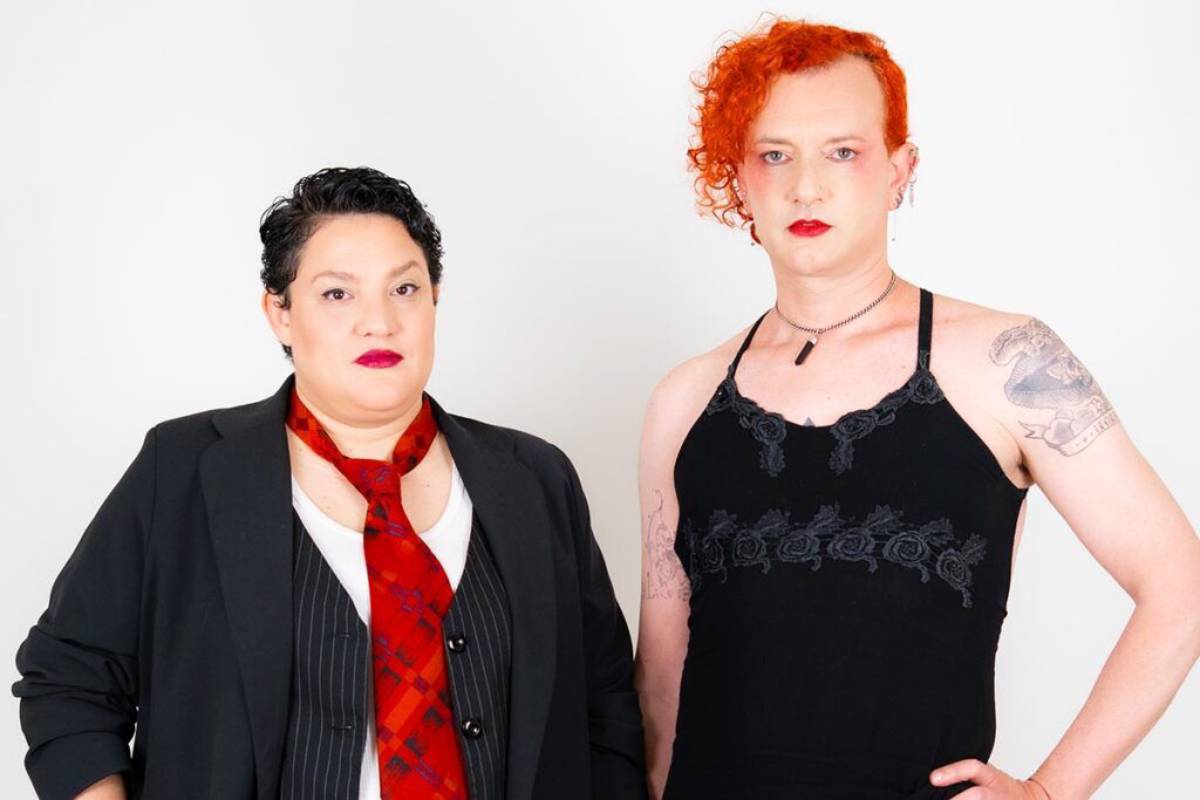
 Cecilia Estalles and María Belén Correa in the exhibition.
For her part, María Belén Correa asserts the right to a collective history of everyday life. “If one of us died in a hotel, her photos and memories were thrown in the trash. Or discarded by a family that didn't want to acknowledge those life choices. Now we seek to share our experiences to recover our past; we have a right to a memory.”
Cecilia Estalles and María Belén Correa in the exhibition.
For her part, María Belén Correa asserts the right to a collective history of everyday life. “If one of us died in a hotel, her photos and memories were thrown in the trash. Or discarded by a family that didn't want to acknowledge those life choices. Now we seek to share our experiences to recover our past; we have a right to a memory.”
Share
We are present
We are committed to journalism that delves into the territories and conducts thorough investigations, combined with new technologies and narrative formats. We want the protagonists, their stories, and their struggles to be present.
SUPPORT US

FOLLOW US
Related notes
We are present
This and other stories are not usually on the media agenda. Together we can bring them to light.